


Whether you’re developing high-frequency trading algorithms, backtesting strategies, or analyzing market data, ensure your tools are working for you, not against you. Whether used as a learning guide or a reference manual, it offers substantial value to the evolving algorithmic trading community. While the algorithmic trading space is crowded with books and online resources, Python for Algorithmic Trading Cookbook Jason distinguishes itself through its practical, code-first approach. It equips readers with the tools and knowledge necessary to develop, test, and deploy trading algorithms effectively. By blending Python programming with financial theory and real-world data challenges, the cookbook serves as a valuable resource for anyone interested in systematic trading. Over the past decade, trading has been steadily shifting away from purely discretionary, manual decision-making toward more automated, systematic, and increasingly AI-assisted approaches.
Most reinforcement learning examples stop at one agent trained in one environment. In production trading, the real challenge is not “can we train an agent? ” but “can we trust any agent enough to allocate capital to it — repeatedly, across regimes? MARL simulations model participants such as liquidity providers, market makers, and directional traders. Each agent observes the market, makes decisions, and adjusts based on others’ behaviour.
Understanding Structural and Execution Abuse
While he has been secretive about specific strategies, he emphasizes the importance of trend identification, long-term trends, and chart patterns in his trading style. Ed Seykota believes that success in trading necessitates not just technical skills but also strong emotional awareness. Emotional and mental rules are critical for trading success, as they lead to disciplined investment management and improved performance.
Algorithmic and AI-Powered Signals
The XT version of the platform offers essential tools for futures trading, such as Level 2 market data and volume-aware execution, making it a trusted choice for discretionary traders. The journey into algorithmic trading can be challenging, especially when faced with steep learning curves in both finance and programming. The “python for algorithmic trading cookbook jason” offers a practical, engaging, and comprehensive guide that helps traders overcome these hurdles. By focusing on actionable recipes, real-world examples, and integrating state-of-the-art techniques, it equips readers with tools to design, test, and deploy effective trading systems. Across global financial markets, algorithmic trading systems now execute the majority of trades.
Free Tools (22+ Calculators)
The “python for algorithmic trading cookbook jason” embodies this trend by providing a structured yet flexible learning path. Bots operate continuously, scanning decentralized finance (DeFi) protocols, social media and news to act within seconds. Coincub estimates that 70% of global trading volume is now executed by algorithms, primarily institutional bots. The quality of data feeding these systems matters as much as speed. DXTrade lets you implement automated trading strategies with ease. It integrates with platforms like NinjaTrader and MultiCharts, enabling traders to turn their ideas into functional code.
” (the answer is no if a is divisible by any smaller natural number besides 1). For questions or problems with only a finite set of cases or values an algorithm always exists (at least in principle); it consists of a table of values of the answers. In general, it is not such a trivial procedure to answer questions or problems that have an infinite number of cases or values to consider, such as “Is the natural number (1, 2, 3,…) a prime? ” or “What is the greatest common divisor of the natural numbers a and b?
Who Should Use This Cookbook?
Seykota emphasizes risk management, advising traders to risk no more than they can afford to lose. He suggests that a meaningful win should make the risk worthwhile, and he stresses the importance of avoiding whipsaw losses by ceasing trading when necessary. He developed his first trading system based on exponential moving averages in the 1970s.
What Sets the Python for Algorithmic Trading Cookbook Jason Apart?
Short-term volume spikes may look attractive on paper, but they rarely build durable relationships or sustainable businesses. Youssef Bouz (GCC Brokers) explains STP trading environments, slippage, spreads, and broker–trader alignment. The most dangerous assumption is that a working algorithm does not need monitoring. Get payouts in as little as 3 days with the Rapid Challenge, or go long term with no consistency rules in funded on the Legacy Challenge with up to 5 accounts. These features are further supported by DXTrade XT’s robust data infrastructure, which enhances efficiency in futures iqcent review trading.
- Algorithmic trading has transformed how individuals and institutions approach the markets.
- High-frequency trading uses powerful hardware and specialized algorithms to place and execute trades in milliseconds.
- Algorithmic trading uses computer programs to execute trades automatically based on predefined rules, data analysis, and market signals.
- Custom tags from Edgewonk won’t transfer automatically — you’d need to re-tag or let TSB’s AI find the patterns instead.
- In today’s trading landscape, Python has emerged as the lingua franca for algorithmic trading due to its simplicity and extensive libraries.
- Detailed code examples, which explain the step-by-step creation of trading robots and applications, allow for a deeper understanding of algorithmic trading nuances.
He often uses metaphors and anecdotes to make complex concepts more accessible, helping traders grasp the core tenets of his methodology. How Ed Seykota turned $5,000 into $15 million analyzes his remarkable 250,000% return over 16 years, emphasizing his disciplined and systematic trading approach. Secrets behind his success highlight his focus on risk management and letting winners run, drawn from insights in Market Wizards. Quotes from the book provide a personal glimpse into his mindset, making the story both inspiring and educational. This data typically includes metrics such as current inventory levels, bid ask spreads, market depth, recent price volatility, and trading volume trends.
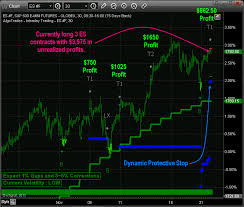
Algorithmic Trading with Python and API Integration
His work has introduced consistency and reliability to financial markets, making a lasting impact on the trading community. Emotional discipline is a cornerstone of Ed Seykota’s trading approach. He understands that emotions like fear and greed can severely impact decision-making, often leading to poor trading performance.
Conclusion: The Place of Python for Algorithmic Trading Cookbook Jason in Quantitative Finance
The Python for Algorithmic Trading Cookbook by Jason is designed as a hands-on manual that offers readers a wide array of practical recipes to develop, backtest, and deploy trading algorithms. Unlike purely theoretical texts, this cookbook emphasizes executable code snippets, real-world examples, and clear explanations for each algorithmic strategy. It appeals to data scientists, quantitative analysts, and retail traders who want to harness Python’s powerful libraries to automate market strategies. As algorithmic trading continues to evolve, the demand for reliable programming guides that integrate financial theory with coding best practices is higher than ever. Algorithmic trading has transformed how individuals and institutions approach the markets. Python’s rise in this domain is no accident—it combines accessibility with powerful capabilities that enable rapid development and deployment of trading algorithms.
An auto-liquidation engine ensures all positions are closed by the end of each trading session, eliminating overnight exposure risks. However, my experience with Composer 2 has been mixed, particularly when applied to the rigorous demands of algorithmic trading development. Let me share what I’ve discovered about Composer 2’s capabilities and limitations in the context of quantitative finance. What started as a frustrating theme bug in Cursor 3 became an opportunity to optimize my entire quantitative finance development workflow. By understanding the limitations and finding workarounds, I not only solved the immediate problem but also improved my overall approach to algorithmic trading development.
Why Python for Algorithmic Trading?
Empower Mia — your agentic AI assistant — to design, backtest, optimize, and live-trade your quantitative strategies on QuantConnect through a streamlined, AI-ready workflow. Built for professional quant teams, Mia delivers the reliability, flexibility, and security needed for real-world trading systems. If AI-native markets are to scale responsibly, automation needs to be supported by transparency, integrity, and auditable performance.
Rich Library of Alternative Data
The cookbook presents methods to design strategies based on technical indicators, statistical models, and machine learning algorithms. It also emphasizes rigorous backtesting procedures, teaching you to evaluate performance metrics such as Sharpe ratio, drawdowns, and win rates to assess strategy viability. Position sizing is a critical component of Ed Seykota’s trading strategy, ensuring that risk is managed effectively. Adjusting position sizes based on market conditions helps traders control risk and reflect market volatility. Establishing exit points in advance, such as stop-loss orders, helps prevent emotional trading decisions and limits potential losses on a trade. For US-based futures traders, DXTrade often becomes the go-to platform due to regulatory restrictions on MT5 and cTrader.